
Licensed tour operator
Registered with the Egyptian Ministry of Tourism, licence no. 1995 — a number you can check before you pay anyone anything.


Be amazed by Oman’s captivating beauty and rich cultural heritage on this carefully crafted six-day itinerary. Begin your adventure in Muscat, where architectural marvels like the Sultan Qaboos Grand Mosque and vibrant traditional souks introduce you to the country’s captivating history and culture. Continue to Nizwa and explore its historic forts and vibrant souks, before taking in the breathtaking scenery of Jebel Shams, known as the Great Valley of Oman. Immerse yourself in the serenity of the vast Wahiba Desert, experience authentic Bedouin hospitality, and cool off in the crystal-clear pools of Wadi Bani Khalid. Along the way, explore charming mountain villages, ancient forts, and coastal towns steeped in their maritime traditions. This itinerary beautifully blends cultural treasures, stunning landscapes, and immersive experiences for an unforgettable exploration of Oman.
Upon your arrival at Muscat International Airport, our dedicated agent will warmly welcome you and assist with all formalities. You will then be transferred to your comfortable hotel in Muscat, where you can relax and unwind after your journey.
Overnight in Muscat
Begin your day with a delicious breakfast at the hotel before setting out on a half-day city tour of Muscat. Visit the magnificent Sultan Qaboos Grand Mosque, an architectural masterpiece renowned worldwide. Explore the Bait Al Zubair Museum, home to an extensive collection of antiques, traditional Omani weaponry, jewelry, costumes, household utensils, and recreated urban and rural settings that showcase Oman’s rich heritage.
Continue to Al Alam Palace, the official residence of His Majesty Sultan Qaboos, set amidst stunning mountains and flanked by the historic Jalali and Mirani forts. Stop at Muttrah, the vibrant port district, and explore its ancient, colorful souk full of local charm. Later, head to Nizwa for your overnight stay, soaking in the city’s deep cultural roots.
Meals: Breakfast, Lunch, Dinner
Overnight in Oman
After breakfast, explore Nizwa, famed for its 17th-century Round Tower Fort and lively souq, known for Friday livestock auctions and exquisite silver jewelry, including intricately carved “Khanjars” (daggers).
Visit Jabrin Castle, a stunning 17th-century fortress adorned with exquisite Omani ceiling paintings and woodwork. Take memorable photos at Bahla Fort, a UNESCO World Heritage Site. Then continue to the traditional village of Misfat Al Abryeen, famed for its charming stone houses and terraced gardens. End your day at Jabal Shams, Oman’s Grand Canyon, where you will spend the night surrounded by breathtaking mountain views.
Overnight in Jabal Shams
Meals: Breakfast, Lunch, Dinner
After breakfast and hotel check-out, begin your day at 8:00 a.m. with a visit to Al Hamra, where you can capture panoramic photos. Explore the Bait Al Safa Museum and the charming clay village of Birkat Al Mauz. Proceed to the stunning Wahiba Sands desert, a serene escape offering vast rolling dunes and Bedouin hospitality.
Optional activities include visiting a Bedouin family, camel riding, and thrilling dune bashing. Experience a magnificent desert sunset followed by a traditional Arabic dinner with dates and Omani coffee. Spend the night in an authentic Arabian Bedouin camp under the stars.
Overnight in Oman
Meals: Breakfast, Lunch, Dinner
Enjoy breakfast at the desert camp before traveling to Wadi Bani Khalid, famous for its crystal-clear pools and lush palm groves—a perfect spot to swim and relax. Take in the scenic views and the local settlements surrounding the wadi.
Later, stop in Sur for a photo opportunity at Al Ayjah Tower and visit a traditional dhow shipyard to witness the craftsmanship behind these iconic vessels. Enjoy lunch before heading back to Muscat, passing by the mesmerizing Bimah Sinkhole.
Overnight stay in Muscat.
Meals: Breakfast, Lunch, Dinner
After a final breakfast at your hotel, check out and prepare for your onward journey. Our team will arrange a timely transfer to Muscat International Airport, ensuring a smooth and hassle-free departure.
Meals: Breakfast
The best time to visit Oman is between October and April. During this period, the weather is mild and pleasant, with temperatures ranging from 25°C to 30°C (77°F to 86°F), making it ideal for outdoor activities and sightseeing.
The cost of a trip to Oman varies based on the type of travel experience you want. On average, a budget trip can cost around $50–$100 per day for accommodation, meals, and transportation. Mid-range travelers might spend around $150–$250 per day, while luxury travelers could spend upwards of $300–$500 per day.
For a general tour, 3 to 7 days is ideal to explore major attractions, including Muscat, the desert, and the mountains. If you're focusing on specific areas or want to explore more thoroughly, you might consider 10–12 days.
The best parts of Oman to visit are diverse, each offering unique experiences. Muscat, the capital city, is known for its rich cultural and historical landmarks, such as the Sultan Qaboos Grand Mosque and the Royal Opera House. For a unique desert adventure, Wahiba Sands is a vast, beautiful desert that offers an authentic experience of the Arabian desert. If you are interested in history, Nizwa is a must-visit, with its famous fort and vibrant souks. For nature lovers, Jebel Akhdar provides stunning mountain landscapes and a cooler climate, perfect for hiking and exploring. Lastly, Salalah, located in the south, is a beautiful coastal city best visited during the monsoon season, with lush landscapes and a unique atmosphere. Each of these locations offers something special for visitors.
Oman is generally considered more expensive than some other destinations in the Middle East, but it offers a variety of options for all budgets. Accommodation, dining, and transportation can be pricey, especially in touristy areas. However, it’s possible to travel on a budget by choosing more affordable options.
Women should dress modestly when in Oman. It’s recommended to wear clothing that covers the shoulders and knees. Lightweight, loose-fitting clothes are ideal for the warm climate. While swimwear is acceptable at hotel pools and beaches, it’s important to cover up when away from these areas. A headscarf is not mandatory for tourists, but it is a common practice in certain places, especially in more traditional areas.
We are not a marketplace reselling someone else's tours. The consultant who plans your itinerary is the same person who answers when you message from Luxor at midnight.
Registered with the Egyptian Ministry of Tourism, licence no. 1995 — a number you can check before you pay anyone anything.
Licensed Egyptologists lead every excursion, named in your confirmation, working for us rather than for a subcontractor.
No group fillers and no shopping stops. Your party, your pace, and a day that can be rewritten the night before.
Entrance fees, transfers, taxes and internal flights sit inside the quote. Nothing is added at the temple gate.
A full day-by-day itinerary costs you nothing, and a 30% deposit is the first money that changes hands.
One number, answered in Egypt, for the whole trip — not a call centre in another time zone.
Every quote is a real one, posted under the traveller's own name.
They helped me plan my day and arranged for an Egyptologist and driver to take me to all these places.
Thanks to well organised sightseeing and tour guide Ahmed who was professional and pleasant.
We trusted EgyVacations for our trip to Egypt… They made our trip anxiety free, they solve every problem from our arrival to the airport till our departure.
You talk to a travel consultant, they build your trip, and you only confirm when the itinerary is right.
Your travel month, group size and what you'd like to see. Two minutes on the form, or a message on WhatsApp.
A consultant writes your day-by-day plan with hotels, guides and transfers, priced in your currency. Free, and yours to keep.
Adjust it as many times as you like. Nothing is booked and nothing is charged until you say the itinerary is right.
You're met at the airport, and your consultant stays reachable 24/7 for the whole trip — the same person, not a call centre.
Pick a question on the left. We answer it the way we would answer it on the phone — with the numbers, and with what we would actually do.

The comfortable half of the year runs October to April: 20–28 °C in Luxor and Aswan, which is what open-deck sailing and three hours inside a temple actually require.
Our tip
Book three to four months out for November to February. For a dahabiya, make it four — they carry twelve people and the good cabins go first.

Most nationalities — US, UK, EU, Australian and Canadian included — get a 30-day tourist visa on arrival, or online as an e-Visa before they fly.
Our tip
Carry the $25 in cash. The visa window at Cairo takes dollars and gives change in Egyptian pounds, and the card machine is not always working.
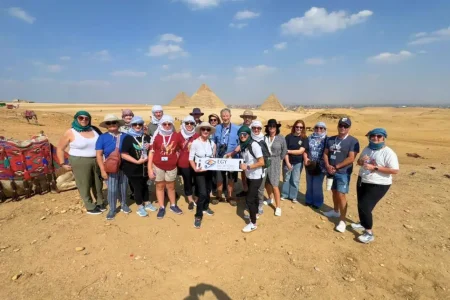
Hotels, cruisers and restaurants take Visa and Mastercard. Markets, tips and small cafés are cash. We quote in US dollars and can invoice in EUR, GBP or AUD.
Our tip
Change a little at the airport and the rest at your hotel. Street exchange offices quote well and pay badly.

Light cotton for the days, one layer for the evenings, and shoes you can walk a temple in. Everything else you can buy here for less than you paid at home.
Our tip
Leave room in the case. Cotton, spices and a hand-made galabeya cost a fraction of the airport price in Khan El Khalili, and your guide will tell you the real one.

Cairo to Luxor is an hour by air and ten by road, so almost every itinerary flies it. Between Luxor and Aswan the river is the road, and your room moves with you.
Our tip
Sail Luxor to Aswan rather than the reverse if you can choose. You go upstream against the current, which means slower, longer afternoons on deck.