
Licensed tour operator
Registered with the Egyptian Ministry of Tourism, licence no. 1995 — a number you can check before you pay anyone anything.


Experience the best of Oman’s natural beauty and cultural treasures on this immersive 3-day journey. From the coastal serenity of Tiwi and Fins to the breathtaking Wadi Shab, discover the country’s awe-inspiring landscapes. Witness turtles nesting at Ras Al Jinz, dive into the emerald waters of Wadi Bani Khalid, and venture into the golden dunes of Wahiba Sands. Round off your adventure with a visit to Nizwa’s historic souk and iconic forts. This short yet rich itinerary captures the essence of Oman in every step.
Your journey begins with a scenic drive from Muscat, passing through the coastal village of Quriyat, a charming fishing town that offers a glimpse into Omani maritime life. Continue to the pristine beaches of Fins and Tiwi, where you’ll have time to relax, take in the sea breeze, or enjoy a refreshing swim in the crystal-clear waters.
Next, we head to Wadi Shab, one of Oman’s most famous wadis. Trek into the canyon surrounded by towering cliffs and lush palms, where hidden pools and waterfalls await those willing to explore further.
In the evening, enjoy a hearty dinner in Ras Al Hadd before visiting the nearby Ras Al Jinz Turtle Reserve, where you’ll witness endangered green turtles nesting on the shores—a magical and unforgettable sight.
Meals: Lunch, Dinner
Overnight: Ras Al Hadd
After breakfast, set out toward Wadi Bani Khalid, an oasis straight from a dream. Swim in turquoise pools, walk alongside date palms, and enjoy the serenity of this natural paradise.
Then, venture into the heart of Wahiba Sands, where vast golden dunes stretch endlessly in every direction. Enjoy the thrill of dune bashing or take a peaceful camel ride as you soak in the desert’s timeless beauty.
As night falls, settle into a traditional desert camp, where you’ll be treated to a delicious dinner and a night under the starlit Arabian sky.
Meals: Breakfast, Lunch, Dinner
Overnight: Desert Camp in Wahiba Sands
Following breakfast, we drive to Nizwa, one of Oman’s most culturally rich cities and its former capital. Visit the bustling Nizwa Souk, known for its silver jewelry, pottery, and traditional crafts.
Explore the Round Tower Fort, an imposing 17th-century fortress with panoramic views over the city and surrounding mountains. Later, step into the history of Jabrin Castle, a beautifully restored palace known for its ornate ceilings and Islamic architecture.
Conclude your journey with a drive back to Muscat, filled with unforgettable memories of Oman’s natural and cultural splendors.
Meals: Breakfast, Lunch
The best time to visit Oman is between October and April. During this period, the weather is mild and pleasant, with temperatures ranging from 25°C to 30°C (77°F to 86°F), making it ideal for outdoor activities and sightseeing.
The cost of a trip to Oman varies based on the type of travel experience you want. On average, a budget trip can cost around $50–$100 per day for accommodation, meals, and transportation. Mid-range travelers might spend around $150–$250 per day, while luxury travelers could spend upwards of $300–$500 per day.
For a general tour, 3 to 7 days is ideal to explore major attractions, including Muscat, the desert, and the mountains. If you're focusing on specific areas or want to explore more thoroughly, you might consider 10–12 days.
The best parts of Oman to visit are diverse, each offering unique experiences. Muscat, the capital city, is known for its rich cultural and historical landmarks, such as the Sultan Qaboos Grand Mosque and the Royal Opera House. For a unique desert adventure, Wahiba Sands is a vast, beautiful desert that offers an authentic experience of the Arabian desert. If you are interested in history, Nizwa is a must-visit, with its famous fort and vibrant souks. For nature lovers, Jebel Akhdar provides stunning mountain landscapes and a cooler climate, perfect for hiking and exploring. Lastly, Salalah, located in the south, is a beautiful coastal city best visited during the monsoon season, with lush landscapes and a unique atmosphere. Each of these locations offers something special for visitors.
Oman is generally considered more expensive than some other destinations in the Middle East, but it offers a variety of options for all budgets. Accommodation, dining, and transportation can be pricey, especially in touristy areas. However, it’s possible to travel on a budget by choosing more affordable options.
Women should dress modestly when in Oman. It’s recommended to wear clothing that covers the shoulders and knees. Lightweight, loose-fitting clothes are ideal for the warm climate. While swimwear is acceptable at hotel pools and beaches, it’s important to cover up when away from these areas. A headscarf is not mandatory for tourists, but it is a common practice in certain places, especially in more traditional areas.
We are not a marketplace reselling someone else's tours. The consultant who plans your itinerary is the same person who answers when you message from Luxor at midnight.
Registered with the Egyptian Ministry of Tourism, licence no. 1995 — a number you can check before you pay anyone anything.
Licensed Egyptologists lead every excursion, named in your confirmation, working for us rather than for a subcontractor.
No group fillers and no shopping stops. Your party, your pace, and a day that can be rewritten the night before.
Entrance fees, transfers, taxes and internal flights sit inside the quote. Nothing is added at the temple gate.
A full day-by-day itinerary costs you nothing, and a 30% deposit is the first money that changes hands.
One number, answered in Egypt, for the whole trip — not a call centre in another time zone.
Every quote is a real one, posted under the traveller's own name.
They helped me plan my day and arranged for an Egyptologist and driver to take me to all these places.
Thanks to well organised sightseeing and tour guide Ahmed who was professional and pleasant.
We trusted EgyVacations for our trip to Egypt… They made our trip anxiety free, they solve every problem from our arrival to the airport till our departure.
You talk to a travel consultant, they build your trip, and you only confirm when the itinerary is right.
Your travel month, group size and what you'd like to see. Two minutes on the form, or a message on WhatsApp.
A consultant writes your day-by-day plan with hotels, guides and transfers, priced in your currency. Free, and yours to keep.
Adjust it as many times as you like. Nothing is booked and nothing is charged until you say the itinerary is right.
You're met at the airport, and your consultant stays reachable 24/7 for the whole trip — the same person, not a call centre.
Pick a question on the left. We answer it the way we would answer it on the phone — with the numbers, and with what we would actually do.

The comfortable half of the year runs October to April: 20–28 °C in Luxor and Aswan, which is what open-deck sailing and three hours inside a temple actually require.
Our tip
Book three to four months out for November to February. For a dahabiya, make it four — they carry twelve people and the good cabins go first.

Most nationalities — US, UK, EU, Australian and Canadian included — get a 30-day tourist visa on arrival, or online as an e-Visa before they fly.
Our tip
Carry the $25 in cash. The visa window at Cairo takes dollars and gives change in Egyptian pounds, and the card machine is not always working.
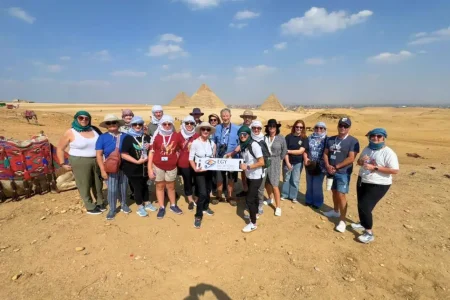
Hotels, cruisers and restaurants take Visa and Mastercard. Markets, tips and small cafés are cash. We quote in US dollars and can invoice in EUR, GBP or AUD.
Our tip
Change a little at the airport and the rest at your hotel. Street exchange offices quote well and pay badly.

Light cotton for the days, one layer for the evenings, and shoes you can walk a temple in. Everything else you can buy here for less than you paid at home.
Our tip
Leave room in the case. Cotton, spices and a hand-made galabeya cost a fraction of the airport price in Khan El Khalili, and your guide will tell you the real one.

Cairo to Luxor is an hour by air and ten by road, so almost every itinerary flies it. Between Luxor and Aswan the river is the road, and your room moves with you.
Our tip
Sail Luxor to Aswan rather than the reverse if you can choose. You go upstream against the current, which means slower, longer afternoons on deck.